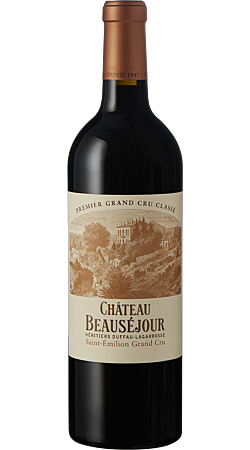
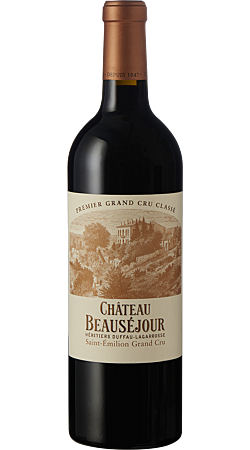
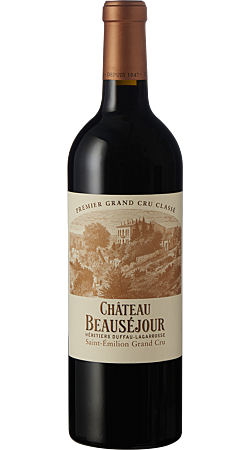
The history of Château Beauséjour
HEIRS ATTACHED TO THEIR ROOTS
What an intense story that ofChâteau BeauséjourIts creation is dated to the 15th century. Passed down through inheritance, the Château was initially named Château Peycogut. It was on the occasion of his marriage to Jeanne de Géres, who had the vineyard as part of her dowry, in 1797, thatJacques de Carlestakes possession of the latter. He will name it "Beauséjour" after falling under the spell of the Gironde vineyards.
In 1847, the doctorDuffau-Lagarrossewife of the estate owner,Louise DucarpeThis is where the lineage that would so profoundly mark the château begins. Seven generations have walked the lands of Beauséjour, and todayChristophe Redaud and Vincent Duffau-Lagarrosse, two cousins, who are in charge of the estate.
The successions and historical vicissitudes have only strengthened—if not fundamentally, then at least in terms of its values—the estate. The current owners aim to pursue progress and modernity without whims or embellishment. With this in mind, the Duffau-Lagarrosse family called upon, in 2009,Nicolas ThienpontAndStéphane Derenoncourt, in order to revitalize the vineyard. It is aPremier Grand Cru Classé B, according to the 1955 classifications, the complex that the Château Beauséjour offers today.
In 2021, the castle was bought by the family heiress, Joséphine Duffau Lagarosse. She also partnered with the Courtin family (Clarins Group).
The Château Beauséjour vineyard
A GENEROUS TERROIR IN THE HEART OF ST EMILION
Located in the Gironde region, in Saint-Émilion, the 6.75 hectares of vines share a hillside with unique terroirs. Indeed, Château Duffau-Lagarrosse is fortunate to have not one, but two distinct terroirs. Four layers of soil follow one another from the top of the hillside to its bottom, over a 30-meter difference in elevation. As a result:
- At the summit, a limestone table with starfish and clays is revealed;
- Halfway up the slope, the soil consists of Fronsac molasse and calcareous marls;
- At the foot of the slope, the presence of ancient colluvium can be observed.
The limestone soils allow the 16% Cabernet Franc and 3% Cabernet Sauvignon to express their tension and vigor. The clay, meanwhile, allows the main grape variety, Merlot (81%), to find a balance between density and freshness. These vines, with an average age of 40 years, benefit from a south-southwest exposure, which contributes to exceptional grape ripening.
Winemaking
A KNOW-HOW CLOSE TO THE EARTH
Made exclusively as red wines, the grapes are harvested by hand. Vinification is carried out plot by plot. Aging lasts between 16 and 18 months, hidden from view, in a quarry located beneath the château. This is undoubtedly one of the wine's defining characteristics.Château Beauséjourwhich allows these products to be imbued with all the subtleties of the terroir, from the vine to the bottle.
Beyond environmental conditions, this wine is above all the result of teamwork, led by passionate winemakers and demanding cellar masters. The history of the château is built on the sweat and passion of the men and women who tirelessly honor the family's ancestors and the richness of their terroir.1er Grand Cru Classé B, from the Château Beauséjour, could offer you nothing less than a beautiful journey to the heart of the Gironde terroir.