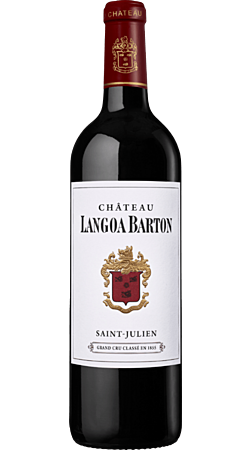
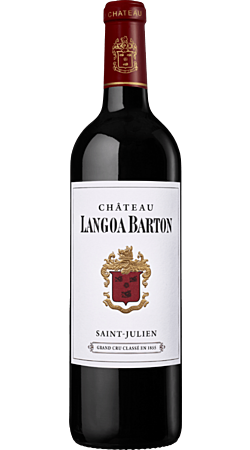
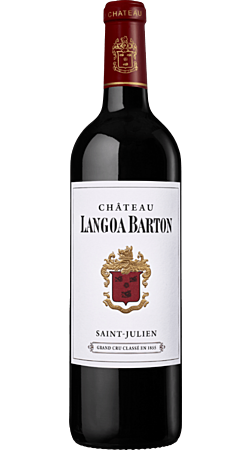
The history of Langoa Barton Castle
Between Ireland and Bordeaux
The story of theThe Barton family began in 1722It was during a trip to Bordeaux that Thomas Barton discovered the intricacies of the wine world. Although he wasn't destined to become a wine merchant, he settled in the region and founded his own trading company. His successor, William, had three daughters and four sons. It was the fourth son, Hugh, who inherited the Bordeaux wine business of the dynasty.
The Irish aristocracy survived the French Revolution of 1789 and, despite some tensions, theBarton familyis allowed to continue its business. In 1855 the vineyard ofChâteau Langoa Bartonis ranked among theThird Growths of the Saint-Julien appellation.
World War II had a considerable impact on the vineyard. Ronald Barton, who had fought alongside the British during the conflict, returned to the estate and set about restoring its former glory. His desire to preserve the heritage passed down by his ancestors was central to this undertaking. This restoration was a success. With the Cold War depriving the Château of its export opportunities, the family focused on perfecting its viticultural and winemaking techniques.
Today, the 9th generation, represented byLilian Bartonand her husbandMichel Sartonius, is preparing to pass the torch to the Barton children.
The Saint-Julien appellation
The production of a terroir wine
It is in the municipality ofSaint-Julienin the Médoc, which is locatedChâteau Langoa Barton. Thisthird Grand Cru Classéextends over an area of20 hectaresThe vines of Cabernet Sauvignon (57%), Merlot (34%), and Cabernet Franc (9%) are planted on gravelly soil over a clay subsoil. These flagship grape varieties of the appellation face the river and benefit from ideal exposure for the concentration of the berries.
According toAnthony BartonLilian's father believes the appellation where the vineyard is located best protects the grapes from weather fluctuations. But the location and climate alone are not enough to produce wines of such high quality. The exemplary consistency demonstrated at each stage of the winemaking process by the teams atChâteau Langoa Bartoncontributes greatly to the reputation of the estate's wines. However, a degree of mystery remains.
It's atraditional viticulturewhich is practiced without chemical fertilizers and herbicides. It is the desire to obtain a terroir-driven wine that motivates theChâteau Langoa BartonAs proof, this estate uses the same techniques as its counterpart, Château Léoville Barton, and only the terroir differs. Thus, it's a successful gamble.
The passion for crafting
"The wine is as important as the moment."
After manual harvesting, the grapes undergo a rigorous selection process. The Château is particularly demanding in the composition of its wines, and this begins with the choice of berries.
These wines are then placed in temperature-controlled wooden vats for a period ranging from 7 to 10 days. Pump-overs are performed depending on the vintage. After gentle extraction, the wines macerate for three weeks. They are then aged for 16 to 18 months in French oak barrels (60% new).Léoville Barton and Langoa Barton Castlesthey share the cellars.
Jacques and Eric Boissenotassist theChâteau Langoa Bartonin the blend. These are fruity, juicy and seductive wines that reveal themselves.Anthony BartonHe makes a point of explaining that the quality of the wine matters as much as the moment and the people with whom it is tasted. "What matters for a wine is that it is drinkable," he explains, "but what impacts the tasting is the moment that is created around the wine."